Concept 01
Global AI Assistant
Explains unfamiliar terms, surfaces relevant information, and helps people interpret the scenario in front of them.
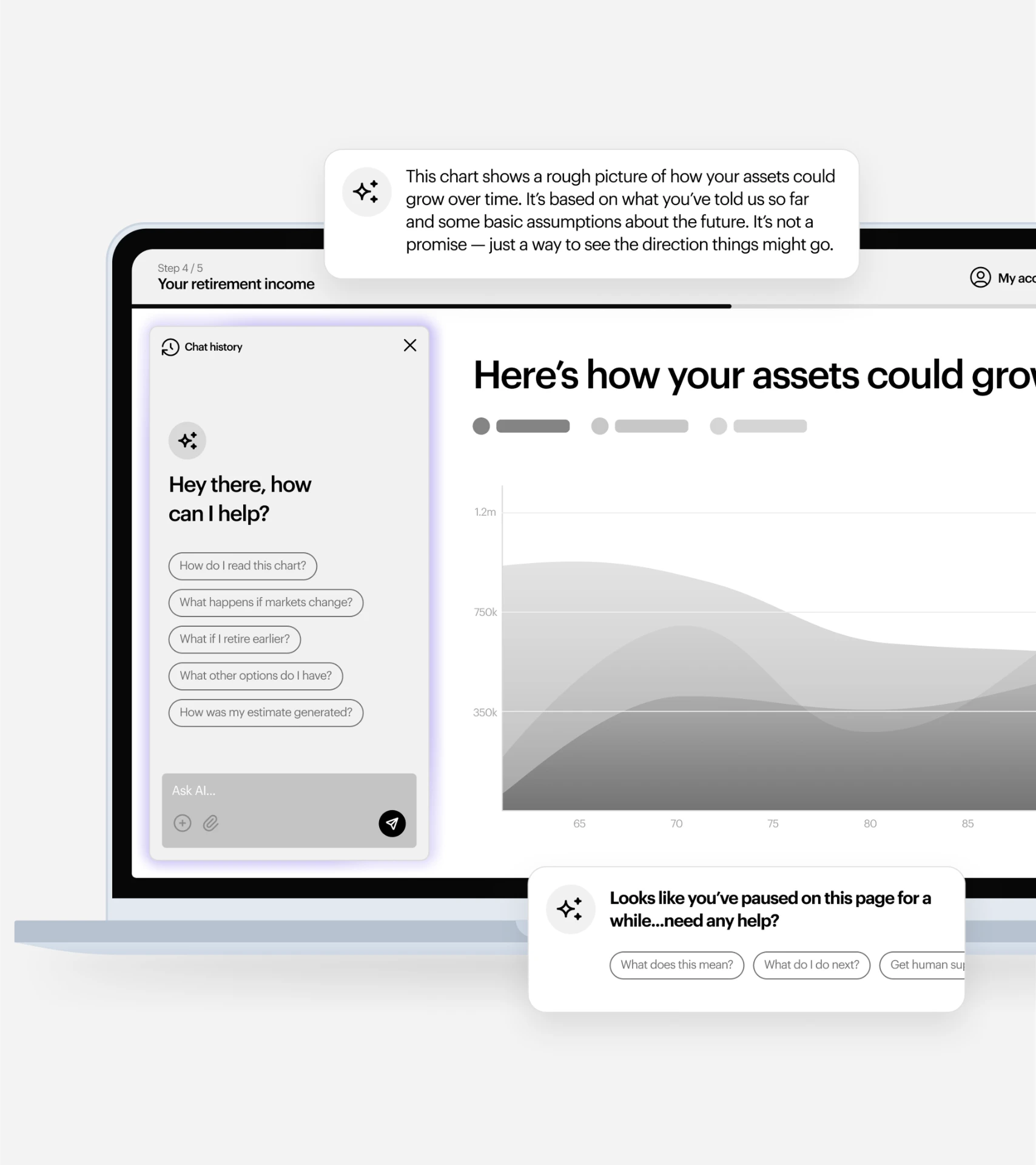
Concept interaction
Interprets the scenario on screen and offers explanation in context.
Retirement is one of the few moments in life where people are asked to make irreversible financial decisions with incomplete certainty.
After decades of saving, investing, and planning, they are suddenly expected to answer questions with lifelong consequences.
These are not calculation questions.
They are judgment questions.
Traditional retirement tools help people calculate financial outcomes. But the question people are actually asking is different.
That gap, the space between information and confidence, is where this work began.
What do the numbers say?
What should I do?
The challenge was not building better calculators. It was filling the space between what the numbers say and what people can do with them.
Working with a global retirement advisory platform, the challenge was not to build a better calculator. The financial models already existed. The recommendations were technically sophisticated.
The harder challenge was helping people navigate one of the biggest decisions of their lives without pretending the uncertainty could be designed away.
The experience began with lightweight, qualitative inputs. Before introducing projections or recommendations, it asked what mattered, what trade-offs felt acceptable, and what else should shape the decision — responding to the individual before modeling a possible path.
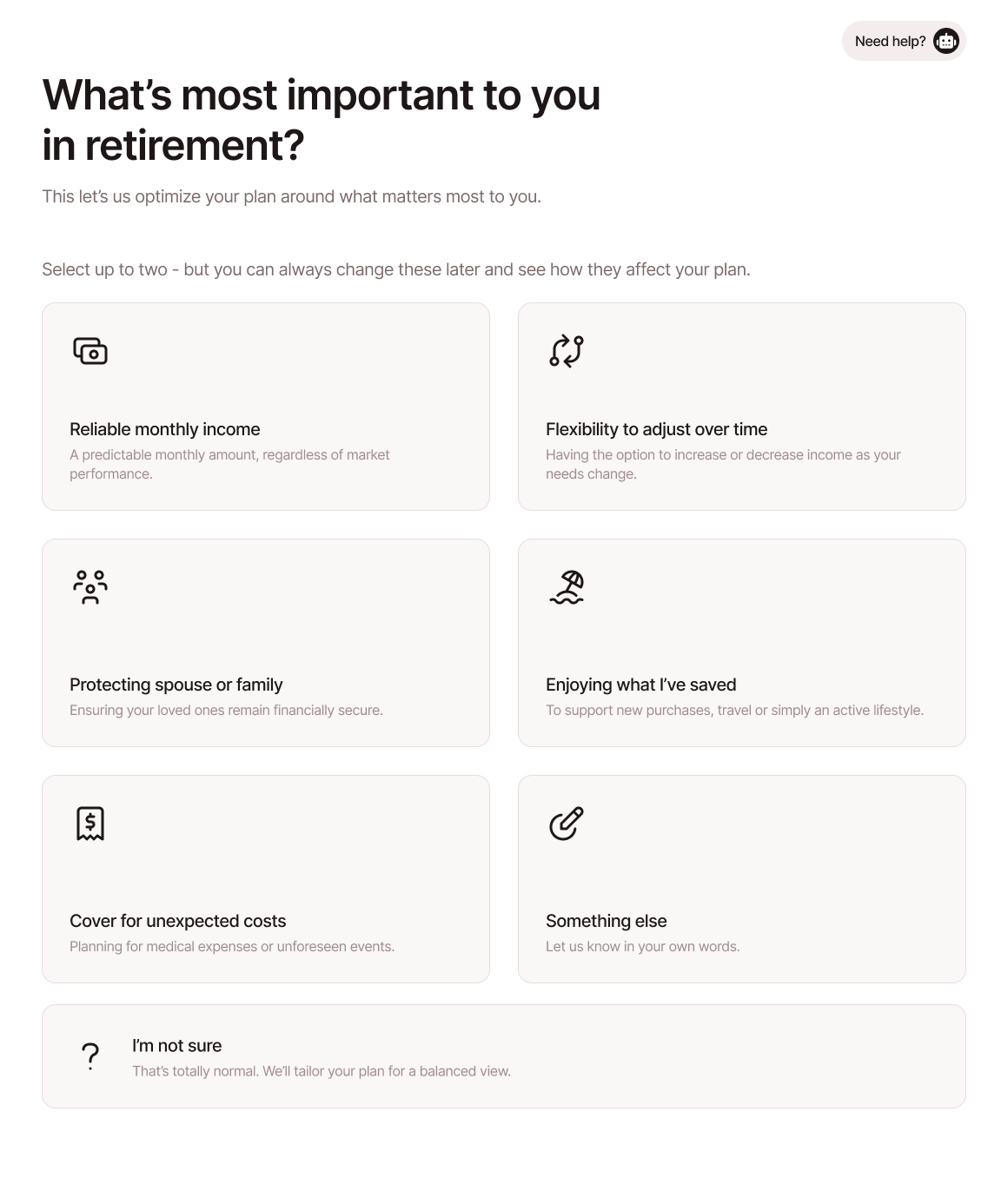
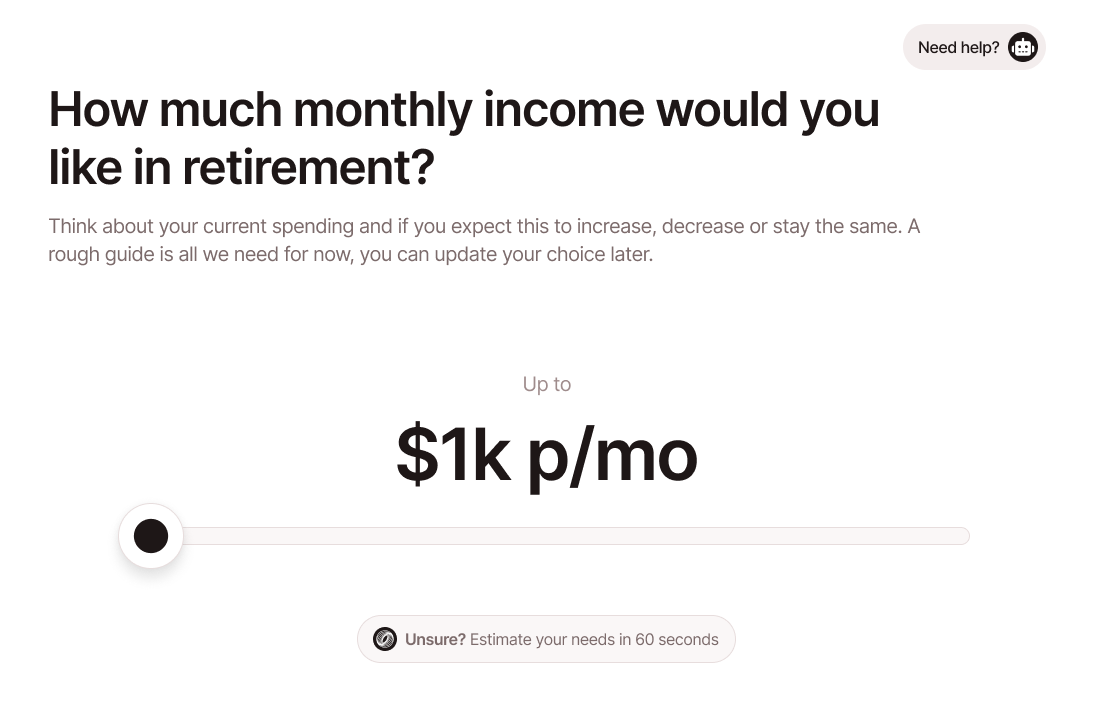
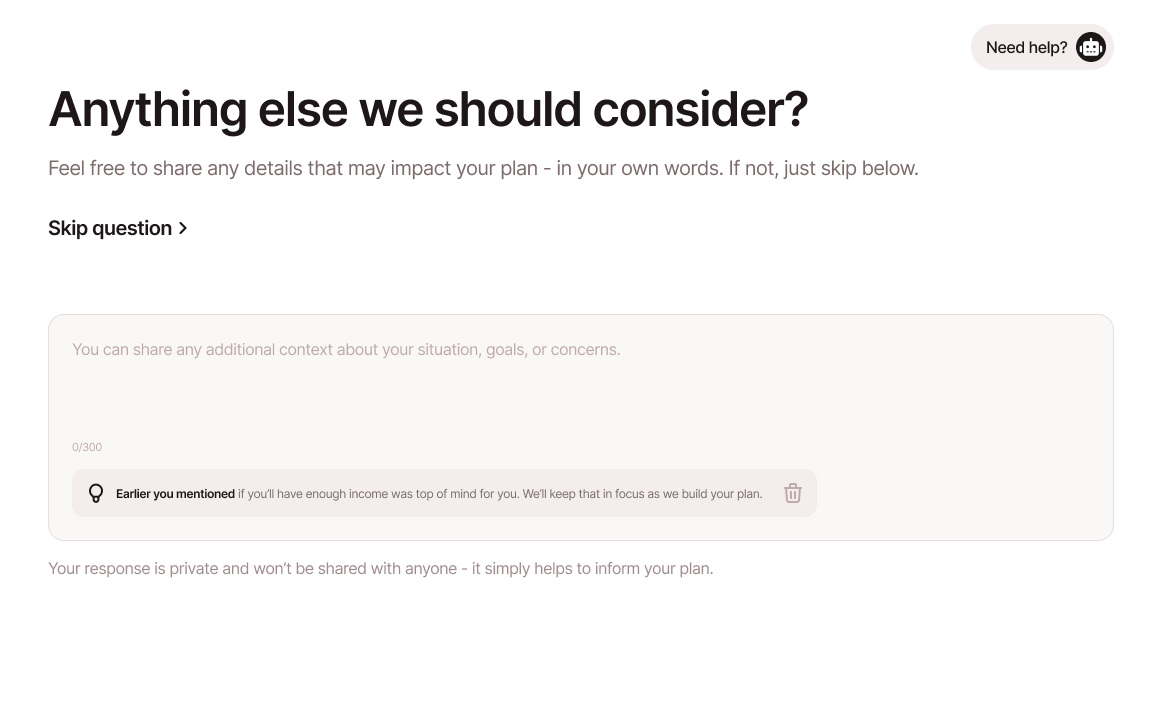
What it did not yet have was a unified experience connecting those pieces into a coherent decision journey.
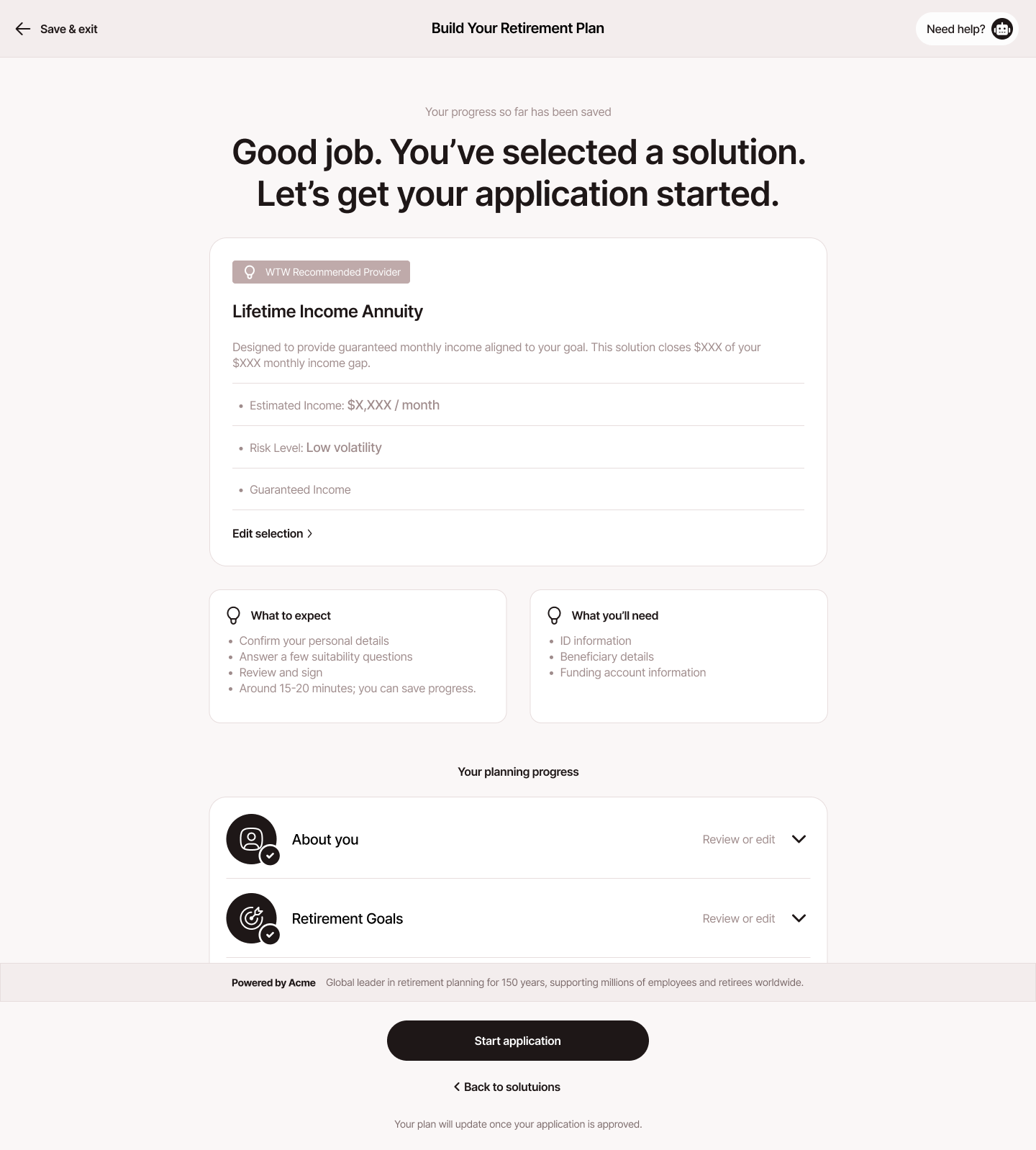
Rather than treating retirement planning as a sequence of financial tasks, the experience was reframed as a progression of decisions. First, understand where you stand. Then explore what could improve. Compare possible paths and their trade-offs. Choose an approach aligned with your goals. Only then evaluate the providers and products capable of bringing that strategy to life.
No commitment required.
Strategy first. Products second.
The result was not fewer choices. It was better timing.
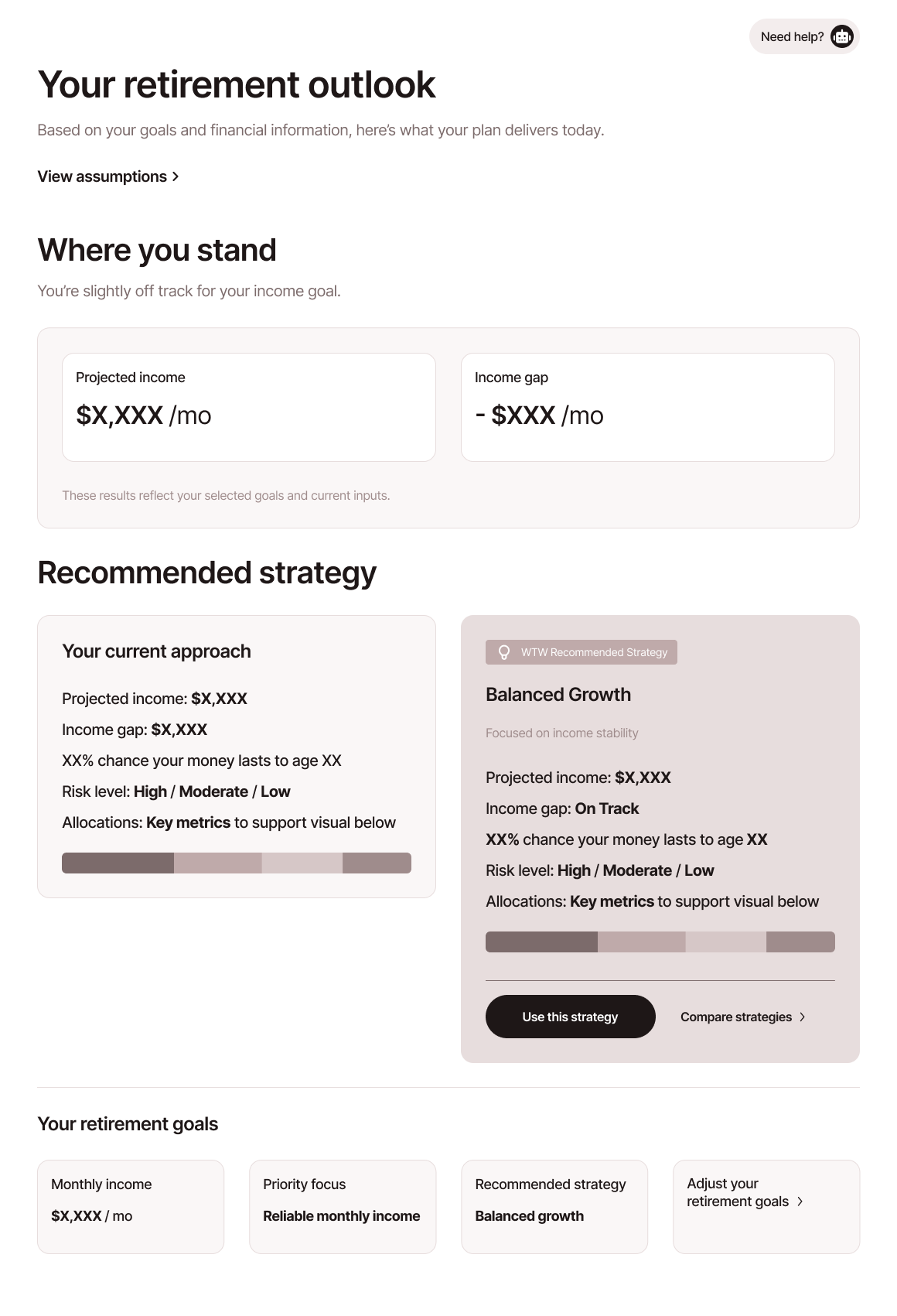
Confidence is not earned by presenting one supposedly correct answer. It is earned by helping people compare different strategies and understand what each one changes.
The experience allowed users to compare a current approach with alternative growth or stability strategies, making assumptions, outcomes, and trade-offs visible side by side.
AI could help explain unfamiliar concepts, surface relevant information, and reduce friction throughout the modeling process.
Human expertise remained available at the moments where confidence mattered most. The opportunity was not to replace trusted advisors. It was to help digital guidance and human expertise complement one another.
To support consequential decisions during modeling, the experience explored several forms of assistance. Each is shown here as a concept.
Explains unfamiliar terms, surfaces relevant information, and helps people interpret the scenario in front of them.
Interprets the scenario on screen and offers explanation in context.
Allows a person to request human review without losing the context of the strategy already modeled.
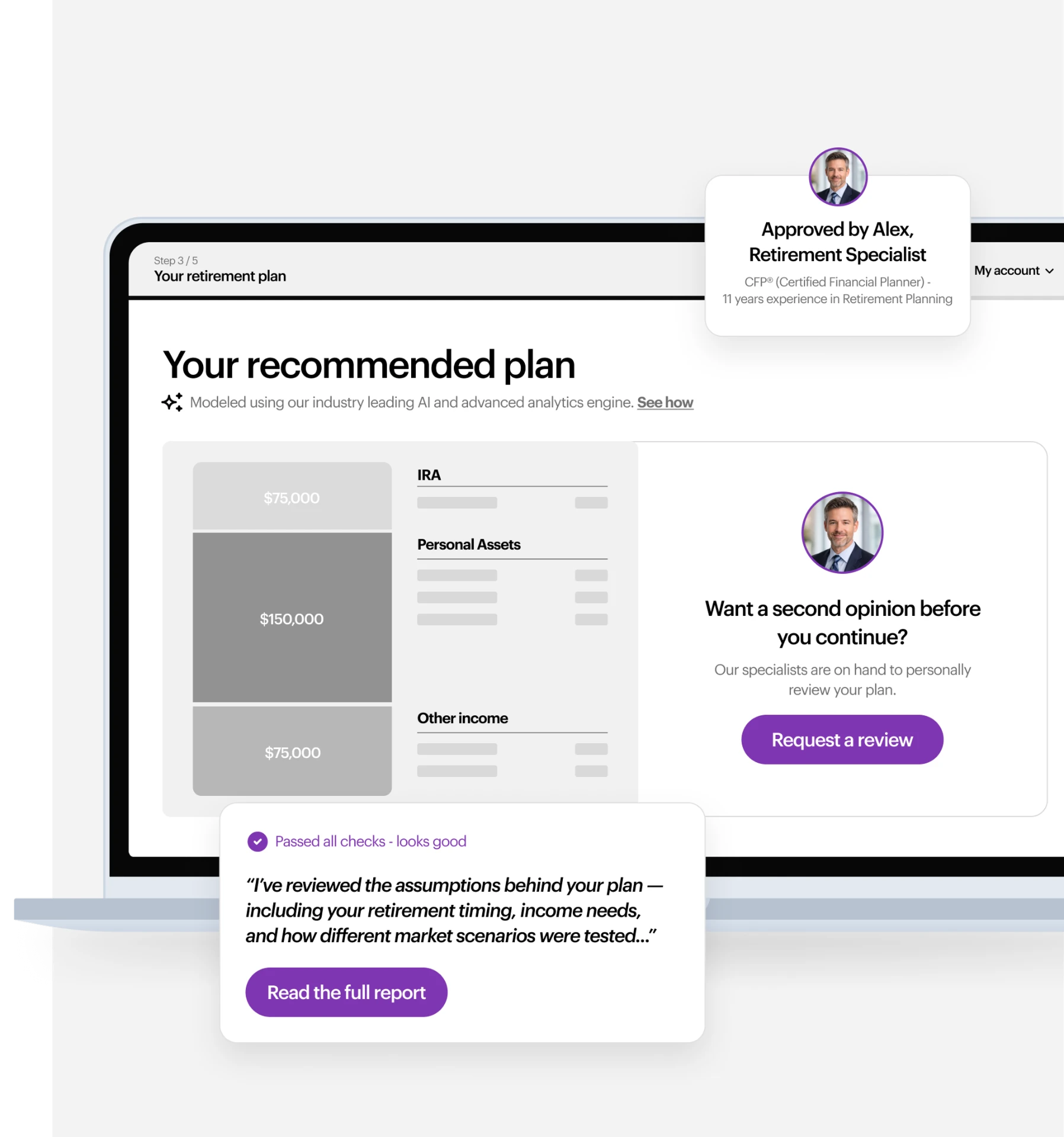
Carries the modeled scenario into the request for human review.
Provides broader context for interpreting a possible path, including relevant employer information or anonymized comparisons.
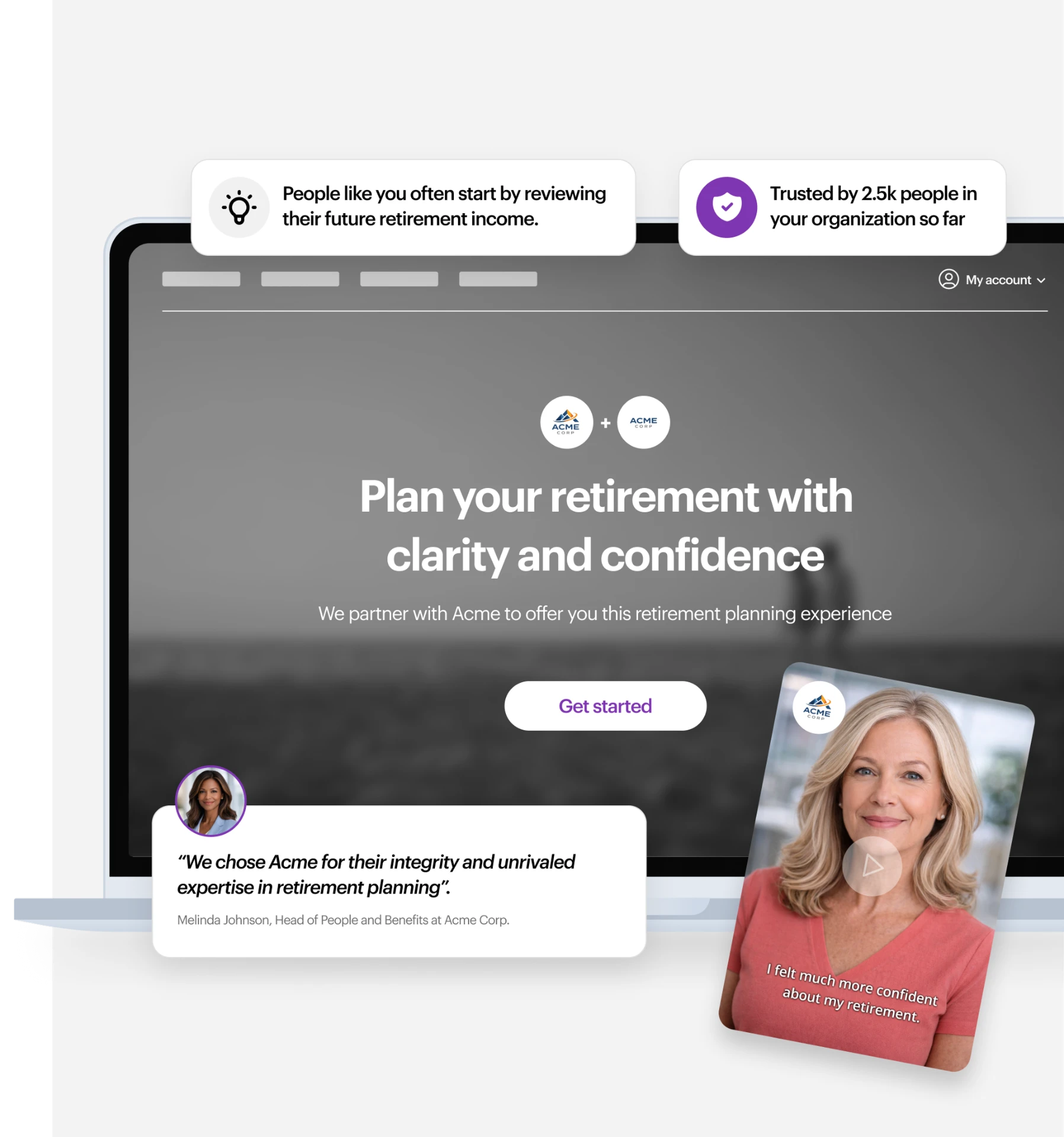
Places a possible path alongside anonymized comparisons.
The project reframed retirement planning from a collection of financial tools into a more coherent decision journey.
By separating strategic planning from implementation, the experience connected retirement goals, financial modeling, strategy evaluation, and marketplace selection into a clearer progression.
It did not simplify retirement. It helped people move through its complexity with clearer trade-offs, better timing, and more confidence in the decisions ahead.
This project reshaped how I think about designing for consequential decisions.
The challenge was never making financial information more sophisticated. It was helping people move from uncertainty to action without pretending certainty existed.
Design is more than organizing information or refining interfaces. At its best, it creates the conditions for better judgment.
The work continues to shape how the studio approaches technology in domains where trust and human judgment matter.
Let's compare notes on how complexity, technology, and human judgment can work together more clearly.